AbSapien: AI-Powered Human Antibody Discovery
AbSapien uses AI to discover naturally occurring antibodies from billions of human B-cell receptor sequences: antibodies already selected by the human immune system, via three discovery routes.

Current Antibody Engineering Platforms Have a High Clinical Failure Rate
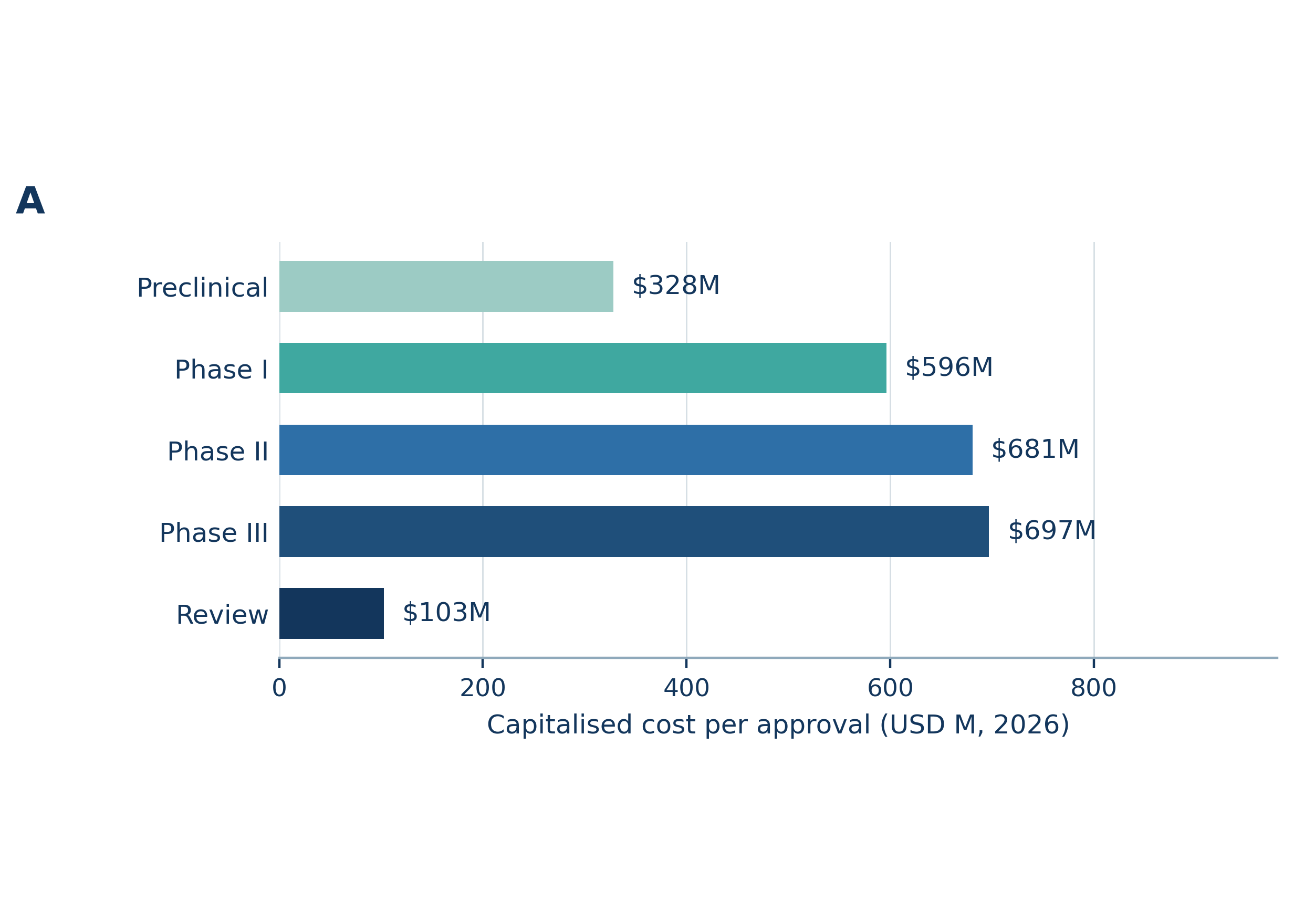
The cost of bringing a new drug to market has been steadily increasing, largely due to the high rate of failure in clinical trials: only 1 out of 9 candidates that enter clinical trials makes it to market. As a result, it costs an average of $2.4 billion to bring a new monoclonal antibody to market (Fig. 1A).
Figure 1A. Capitalised cost per approved mAb by development phase.
Most Therapeutic Antibodies were Engineered in Laboratories
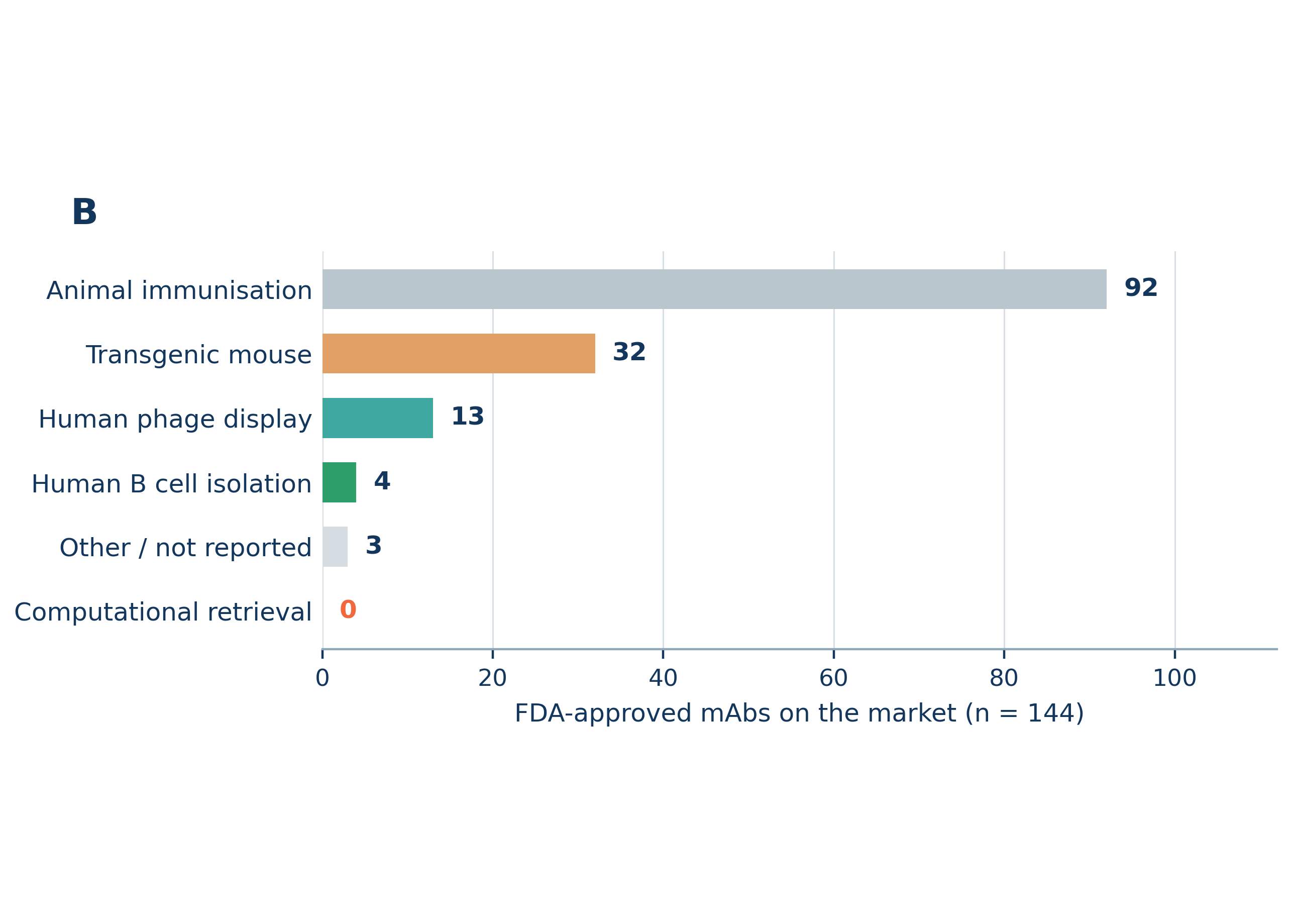
Therapeutic antibodies are typically generated in laboratory animals or in vitro display platforms and then engineered to work in humans (Fig. 1B). Current generative AI platforms optimize antibodies for affinity and in vitro developability but do not subject them to selection by the human immune system. Even high-affinity AI-generated antibodies can exhibit polyreactivity and other developability liabilities.
Figure 1B. Discovery routes of approved and marketed antibodies.
The Solution: Don’t Engineer, Discover
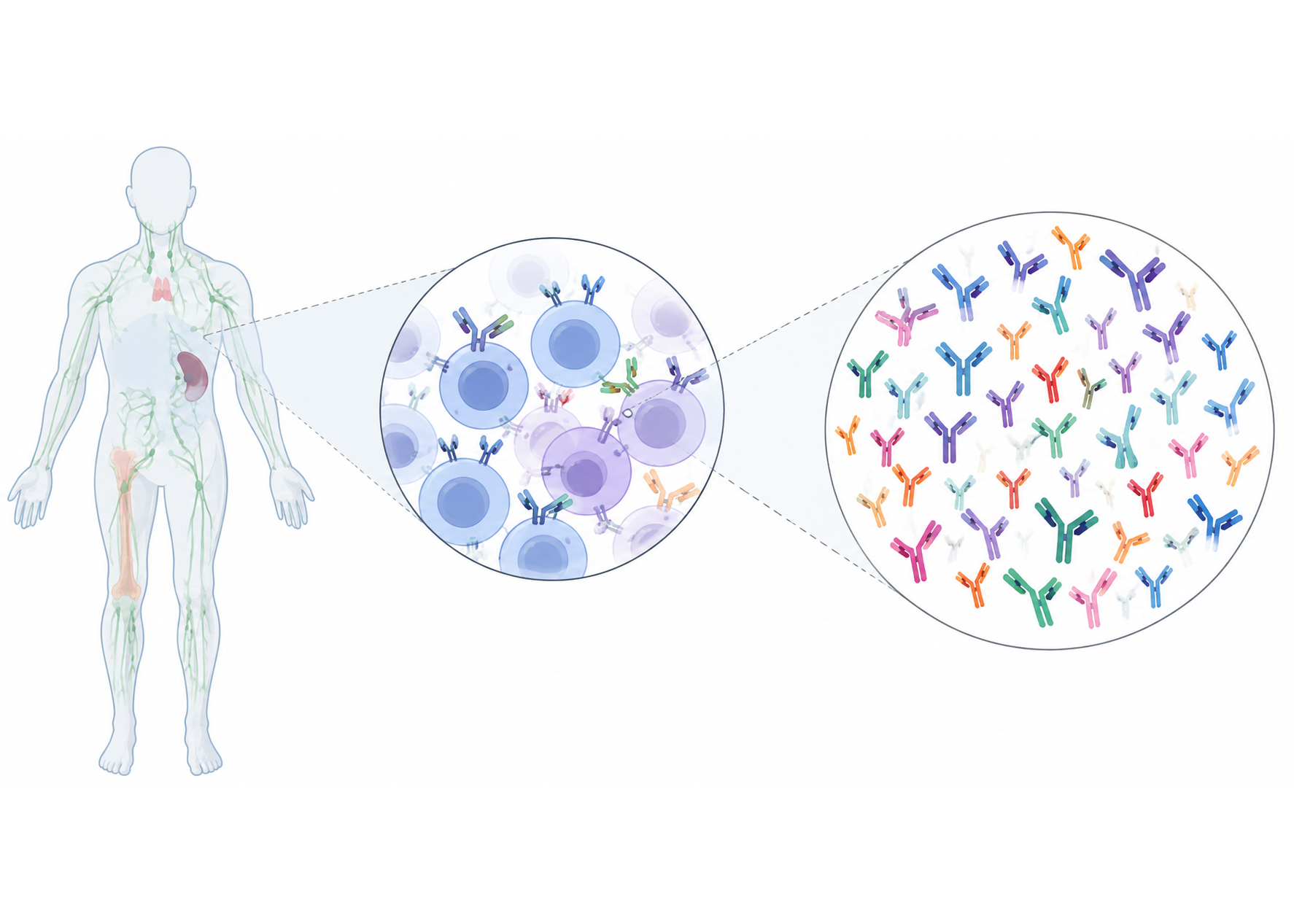
An alternative to engineering antibodies in the laboratory or on the computer is to discover functional antibodies inside healthy humans.
Humans can generate over 10²⁰ different antibody sequences. The sequences observed as B cell receptors (BCRs) have passed rigorous selection criteria. Antibodies observed recurrently across multiple healthy donors have therefore already passed the tolerance checkpoints that remove self-reactive and immunogenic sequences in vivo.
A fully human sequence is not the same as a sequence selected in a human. For example, adalimumab, a fully human phage-display antibody, induces anti-drug antibodies in 5–89% of patients depending on indication and co-therapy, and golimumab, derived from transgenic mice, in 16%.
AbSapien: AI-Powered Antibody Discovery
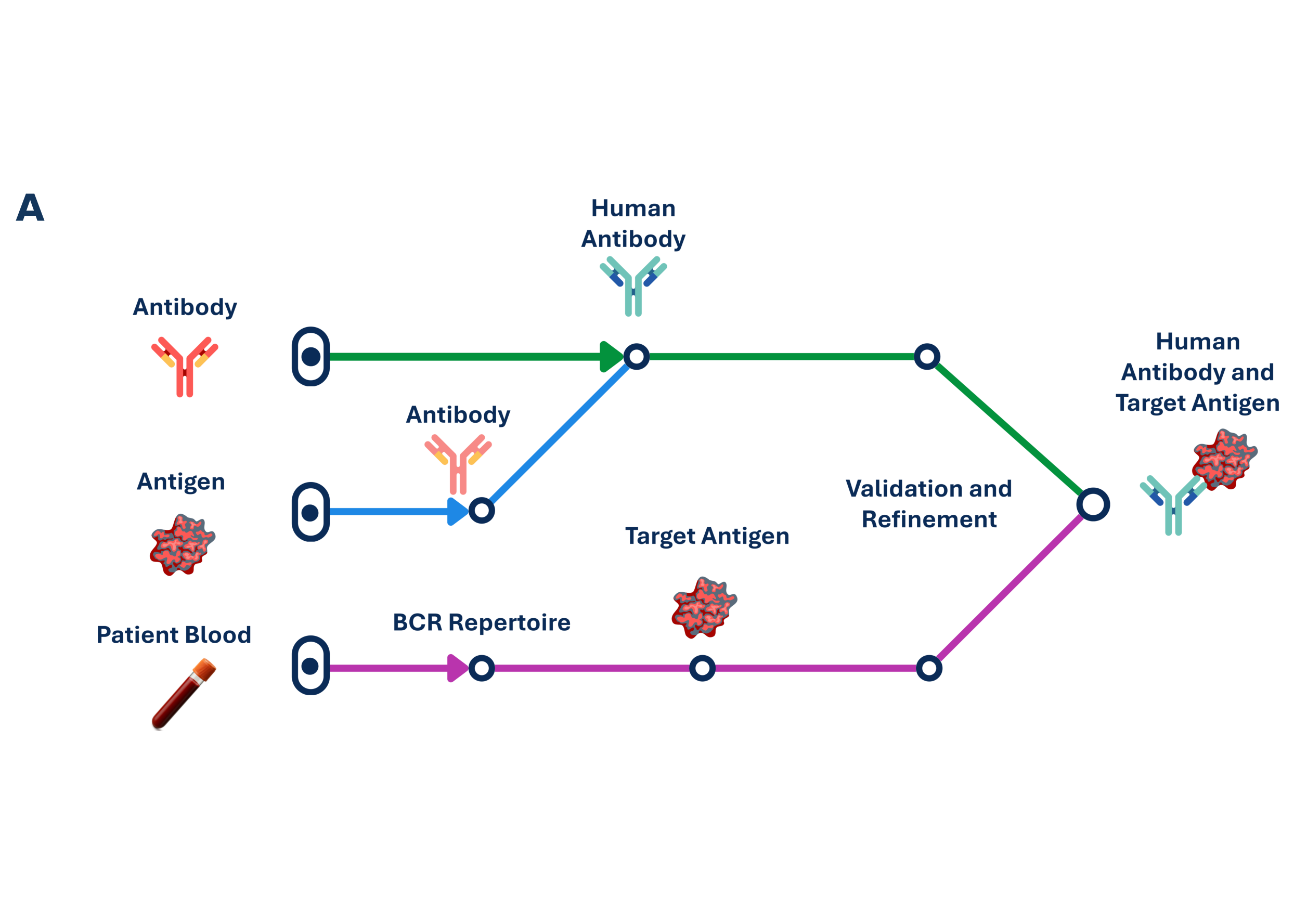
AbSapien uses AI to identify naturally occurring human antibodies from healthy human BCR sequences. Rather than relying on a single machine learning model, AbSapien provides three distinct routes to antibody discovery.
Figure 2A. AbSapien overview: Antibody In, Antigen In, Patient Blood In.
Proof of Concept: Retrieving Human Anti-HER2 Antibodies
Starting with an existing antibody, AbSapien identifies functionally similar antibodies from billions of human BCR sequences in minutes. Proprietary antibody language models reduce the search space to sequences with highly similar antigen-binding regions (paratopes).
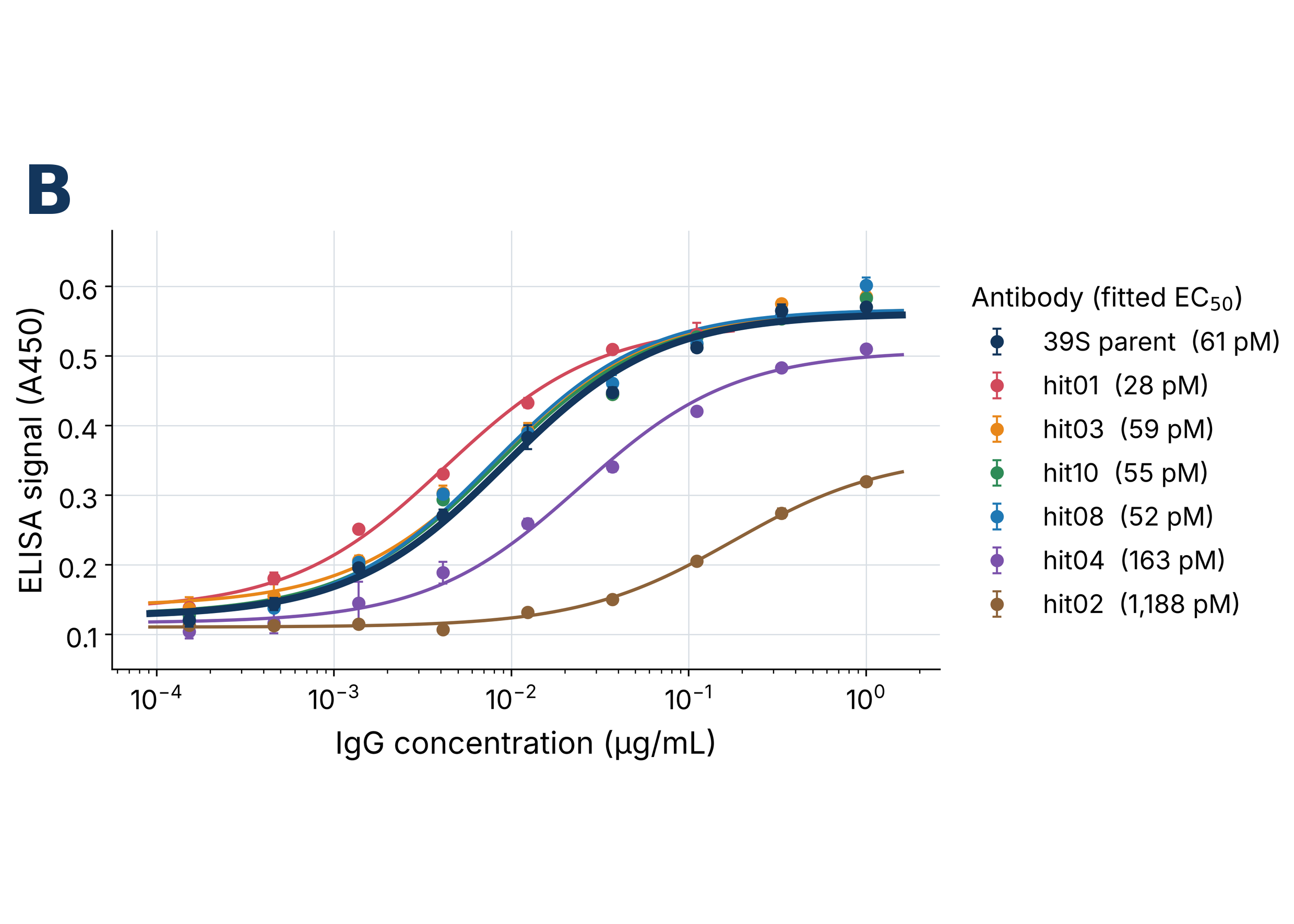
As proof of concept, we started with the legacy anti-HER2 antibody 39S, one arm of the biparatopic antibody MEDI4276. We obtained seven high-quality hits, six of which bound HER2 when expressed and tested as full-length IgG. One had a lower EC50 than the parent antibody.
Figure 2B. ELISA binding curves for HER2 parent 39S and retrieved human antibodies.
Proof of Concept: Neutralizing Antibodies Against Bordetella pertussis
As proof of concept, we used the Patient Blood In route to identify neutralizing antibodies against Bordetella pertussis, the bacterium responsible for whooping cough. Guided by the neutralizing epitope, we engineered a single soluble subunit as a potentially more scalable vaccine candidate.
Three Routes to Antibody Discovery
AbSapien provides three distinct routes to the discovery of naturally occurring human antibodies.

Antibody In
Starting with an existing antibody, AbSapien identifies functionally similar antibodies from billions of human BCR sequences in minutes. Proprietary antibody language models reduce the search space to sequences with highly similar antigen-binding regions (paratopes).

Antigen In
Starting with a target antigen, initial antibody hits are generated using in vitro or in silico approaches. These are then used as inputs to the Antibody In route to identify naturally occurring human antibodies.

Patient Blood In
Starting with patient BCR sequences, AbSapien identifies disease-associated antibody clusters whose members recognize the same antigen at the same epitope. In vitro and in silico methods are then used to identify their target antigens and epitopes.